With the amount of new subnets being added it can be hard to get up to date information across all subnets, so data may be slightly out of date from time to time
BitAds (Subnet-16 on the Bittensor network) is a decentralized performance marketing and advertising subnet. It flips the traditional online advertising model by making advertisers pay only for actual sales or conversions rather than for clicks or impressions
bankless.com. In BitAds, brands stake or rent the subnet’s native token (SN16, often called Alpha) to acquire “marketing bandwidth,” and publishers/marketers (the subnet’s miners) are rewarded only for verified sales outcomes. This performance-based approach aligns incentives: every advertising dollar goes toward real revenue (completed purchases) instead of wasted on mere views or clicks. In essence, BitAds creates a blockchain-powered affiliate marketing network where ad spend is tied directly to conversions, ensuring transparency and ROI for advertisers while fairly rewarding those who generate genuine sales.
Traditional ad networks often charge for traffic or clicks with no guarantee of sales, but BitAds “rewards miners (marketers) based on actual sales they generate”, making it the first decentralized pay-per-sale advertising network on Bittensor. It leverages Bittensor’s substrate blockchain to track contributions and distribute rewards automatically when conversions occur. This unique incentive mechanism provides high-quality, cost-effective advertising by disincentivizing fake traffic – advertisers pay nothing unless a sale is made. In summary, BitAds turns the $1 trillion digital ad market on its head by tokenizing marketing campaigns and only monetizing successful outcomes (sales), all secured and automated via the Bittensor subnet.
BitAds (Subnet-16 on the Bittensor network) is a decentralized performance marketing and advertising subnet. It flips the traditional online advertising model by making advertisers pay only for actual sales or conversions rather than for clicks or impressions
bankless.com. In BitAds, brands stake or rent the subnet’s native token (SN16, often called Alpha) to acquire “marketing bandwidth,” and publishers/marketers (the subnet’s miners) are rewarded only for verified sales outcomes. This performance-based approach aligns incentives: every advertising dollar goes toward real revenue (completed purchases) instead of wasted on mere views or clicks. In essence, BitAds creates a blockchain-powered affiliate marketing network where ad spend is tied directly to conversions, ensuring transparency and ROI for advertisers while fairly rewarding those who generate genuine sales.
Traditional ad networks often charge for traffic or clicks with no guarantee of sales, but BitAds “rewards miners (marketers) based on actual sales they generate”, making it the first decentralized pay-per-sale advertising network on Bittensor. It leverages Bittensor’s substrate blockchain to track contributions and distribute rewards automatically when conversions occur. This unique incentive mechanism provides high-quality, cost-effective advertising by disincentivizing fake traffic – advertisers pay nothing unless a sale is made. In summary, BitAds turns the $1 trillion digital ad market on its head by tokenizing marketing campaigns and only monetizing successful outcomes (sales), all secured and automated via the Bittensor subnet.
BitAds is built as a blockchain-based advertising platform integrated with real-world e-commerce tracking tools. The team has developed a system where an advertiser can connect a tracking pixel and their Stripe payment account to the BitAds network. In practice, a brand installs the BitAds Pixel on their website (to log visitor clicks/referrals) and links BitAds to their Stripe checkout or store backend. This allows BitAds to collect data on ad-driven visits and tie them to actual purchase events (Stripe-confirmed sales) in a secure, verifiable way. When an advertiser wants to launch a campaign, they stake a certain amount of SN16 (Alpha) tokens to “own” a portion of the marketing bandwidth on the subnet. This stake serves as the budget for the campaign.
On the other side, publishers or marketers act as BitAds miners – they pick up campaigns and drive traffic (through ads, content, referrals, etc.) to the brand’s site. The BitAds system tracks each referred visit via the Pixel and knows if that visit results in a purchase (thanks to the Stripe integration). Only when a conversion (sale) is completed is a reward triggered: the network releases a portion of the advertiser’s staked tokens as a payout to the successful marketer/miner. This ensures “zero waste” marketing spend, as companies truly pay only for verified sales. All of these interactions (impressions, conversions, payouts) are recorded on the Subnet-16 blockchain for transparency.
Technically, BitAds uses Bittensor’s infrastructure in an innovative way. It was one of the first subnets not focused on AI model training, but rather on tokenized advertising bandwidth. The subnet uses a concept of sub-subnets (campaign slots) to run multiple advertising campaigns in parallel. Initially, BitAds was limited to two concurrent campaigns (two “subnet slots”), which means at a given time only two distinct campaigns could be active on the network. The BitAds team built their product around this: for example, in early trials they ran one campaign themselves and later opened a second slot to community partners (more on this in the Roadmap below). The platform includes algorithms to score and reward miners based on the quality and quantity of sales they drive. After early testing, the developers refined their data collection and scoring metrics to prevent abuse – for instance, they addressed artificial or low-quality traffic by requiring actual checkout confirmations and by integrating directly with e-commerce platforms like Shopify for reliable sales data. This means the BitAds build is both on-chain and off-chain: on-chain logic handles token staking and reward distribution, while off-chain components (pixels, webhooks, Stripe/Shopify APIs) handle conversion tracking and feed that info into the blockchain.
From a user perspective, the “product” is a decentralized ad network dashboard: Brands log in to set up a campaign (by staking tokens and installing integrations), and marketers join the subnet (likely running a BitAds node or using an interface) to access campaign offers. The system then autonomously matches marketers’ efforts to conversions. In summary, the BitAds build is an end-to-end decentralized affiliate marketing system: a smart blend of blockchain (for incentive alignment and trustless payouts) with web integration (for real-time conversion tracking). This novel architecture allows advertising to be “mined” similar to how data or AI can be mined – BitAds miners earn tokens for producing a valuable result (a sale) rather than for producing hashes or AI answers.
BitAds is built as a blockchain-based advertising platform integrated with real-world e-commerce tracking tools. The team has developed a system where an advertiser can connect a tracking pixel and their Stripe payment account to the BitAds network. In practice, a brand installs the BitAds Pixel on their website (to log visitor clicks/referrals) and links BitAds to their Stripe checkout or store backend. This allows BitAds to collect data on ad-driven visits and tie them to actual purchase events (Stripe-confirmed sales) in a secure, verifiable way. When an advertiser wants to launch a campaign, they stake a certain amount of SN16 (Alpha) tokens to “own” a portion of the marketing bandwidth on the subnet. This stake serves as the budget for the campaign.
On the other side, publishers or marketers act as BitAds miners – they pick up campaigns and drive traffic (through ads, content, referrals, etc.) to the brand’s site. The BitAds system tracks each referred visit via the Pixel and knows if that visit results in a purchase (thanks to the Stripe integration). Only when a conversion (sale) is completed is a reward triggered: the network releases a portion of the advertiser’s staked tokens as a payout to the successful marketer/miner. This ensures “zero waste” marketing spend, as companies truly pay only for verified sales. All of these interactions (impressions, conversions, payouts) are recorded on the Subnet-16 blockchain for transparency.
Technically, BitAds uses Bittensor’s infrastructure in an innovative way. It was one of the first subnets not focused on AI model training, but rather on tokenized advertising bandwidth. The subnet uses a concept of sub-subnets (campaign slots) to run multiple advertising campaigns in parallel. Initially, BitAds was limited to two concurrent campaigns (two “subnet slots”), which means at a given time only two distinct campaigns could be active on the network. The BitAds team built their product around this: for example, in early trials they ran one campaign themselves and later opened a second slot to community partners (more on this in the Roadmap below). The platform includes algorithms to score and reward miners based on the quality and quantity of sales they drive. After early testing, the developers refined their data collection and scoring metrics to prevent abuse – for instance, they addressed artificial or low-quality traffic by requiring actual checkout confirmations and by integrating directly with e-commerce platforms like Shopify for reliable sales data. This means the BitAds build is both on-chain and off-chain: on-chain logic handles token staking and reward distribution, while off-chain components (pixels, webhooks, Stripe/Shopify APIs) handle conversion tracking and feed that info into the blockchain.
From a user perspective, the “product” is a decentralized ad network dashboard: Brands log in to set up a campaign (by staking tokens and installing integrations), and marketers join the subnet (likely running a BitAds node or using an interface) to access campaign offers. The system then autonomously matches marketers’ efforts to conversions. In summary, the BitAds build is an end-to-end decentralized affiliate marketing system: a smart blend of blockchain (for incentive alignment and trustless payouts) with web integration (for real-time conversion tracking). This novel architecture allows advertising to be “mined” similar to how data or AI can be mined – BitAds miners earn tokens for producing a valuable result (a sale) rather than for producing hashes or AI answers.
BitAds was founded by a small team of Bittensor community members with backgrounds in marketing and tech. The co-founders are Albert, Cosmin, and Eseck. On the BitAds website and profiles they are each listed simply as “Co-founder,” reflecting a collaborative effort to bring this idea to life.
Albert – A co-founder who has been active on the business/marketing side of the project. Albert (known online as @AlbertNaghel) has discussed how BitAds was born from combining his vision with Cosmin’s in the Bittensor marketing domain. He often communicates BitAds’ goals and progress to the community. It’s implied that Albert drives strategy and community outreach for BitAds.
Cosmin – Co-founder of BitAds, also with a marketing and growth focus. Albert mentioned that “together with Cosmin, who has stepped into the Bittensor space on the marketing side, [they] decided to bring BitAds (Subnet 16) [to life]”. Cosmin’s full background isn’t detailed in the public sources, but given this context he likely contributes to business development, partnerships (ensuring brands and other subnets use BitAds), and the overall marketing strategy of the subnet.
Eseck – Co-founder and the technical lead of BitAds. Often going by the handle @eseckkk, he is described as the “tech guy” building BitAds. Eseck presumably architected the blockchain integration, the Pixel and Stripe connectivity, and the mining mechanism. In the community, he’s known as the developer with the “blueprint” for BitAds. His leadership on the engineering side enabled the innovative mechanics that differentiate BitAds.
The BitAds team operated with support from the wider Bittensor ecosystem. Notably, the BitAds site mentioned it was “Powered by YDC” (as seen on their footer). YDC likely refers to an incubator or partner (the exact entity isn’t fully explained in available info), but it suggests the project had backing or infrastructure support beyond just the core trio.
Throughout BitAds’ development, the founders have been very engaged with the Bittensor community: doing AMAs, live Q&As, and sharing updates on Twitter. They participated in interviews (for example, with community influencer Siam Kidd and others) to explain their decentralized advertising model. This tight feedback loop with the community helped the small BitAds team iterate quickly. In summary, Albert, Cosmin, and Eseck are the driving forces behind BitAds, combining marketing industry insight (Albert & Cosmin) with technical blockchain expertise (Eseck) to build Subnet-16.
BitAds was founded by a small team of Bittensor community members with backgrounds in marketing and tech. The co-founders are Albert, Cosmin, and Eseck. On the BitAds website and profiles they are each listed simply as “Co-founder,” reflecting a collaborative effort to bring this idea to life.
Albert – A co-founder who has been active on the business/marketing side of the project. Albert (known online as @AlbertNaghel) has discussed how BitAds was born from combining his vision with Cosmin’s in the Bittensor marketing domain. He often communicates BitAds’ goals and progress to the community. It’s implied that Albert drives strategy and community outreach for BitAds.
Cosmin – Co-founder of BitAds, also with a marketing and growth focus. Albert mentioned that “together with Cosmin, who has stepped into the Bittensor space on the marketing side, [they] decided to bring BitAds (Subnet 16) [to life]”. Cosmin’s full background isn’t detailed in the public sources, but given this context he likely contributes to business development, partnerships (ensuring brands and other subnets use BitAds), and the overall marketing strategy of the subnet.
Eseck – Co-founder and the technical lead of BitAds. Often going by the handle @eseckkk, he is described as the “tech guy” building BitAds. Eseck presumably architected the blockchain integration, the Pixel and Stripe connectivity, and the mining mechanism. In the community, he’s known as the developer with the “blueprint” for BitAds. His leadership on the engineering side enabled the innovative mechanics that differentiate BitAds.
The BitAds team operated with support from the wider Bittensor ecosystem. Notably, the BitAds site mentioned it was “Powered by YDC” (as seen on their footer). YDC likely refers to an incubator or partner (the exact entity isn’t fully explained in available info), but it suggests the project had backing or infrastructure support beyond just the core trio.
Throughout BitAds’ development, the founders have been very engaged with the Bittensor community: doing AMAs, live Q&As, and sharing updates on Twitter. They participated in interviews (for example, with community influencer Siam Kidd and others) to explain their decentralized advertising model. This tight feedback loop with the community helped the small BitAds team iterate quickly. In summary, Albert, Cosmin, and Eseck are the driving forces behind BitAds, combining marketing industry insight (Albert & Cosmin) with technical blockchain expertise (Eseck) to build Subnet-16.
BitAds’ roadmap has evolved as the project progressed from concept to active campaigns. Here’s a breakdown of its journey and planned phases:
Launch and Phase 1: BitAds went live as Bittensor’s Subnet-16 around late 2023. In its Phase 1, the team launched the network and ran their own marketing campaign on one sub-subnet slot (each slot being a campaign running on the subnet). This initial campaign was essentially a trial where BitAds itself was the advertiser, proving the model. The goal was to generate real sales revenue through the BitAds model, then use that revenue to buy back their own $SN16 token (Alpha) on the market. This buy-back not only demonstrated confidence in the subnet’s value (recycling profits to support the token) but also helped bootstrap the token economy. Phase 1 established the core functionality – it was about getting a working product and showing that pay-per-sale rewards can be tracked and paid out on-chain.
Phase 2: In the second phase of its roadmap, BitAds planned to open up a second campaign slot to the community. Concretely, the team invited another Bittensor project or member to run an advertising campaign through BitAds. (The founders hinted that this could be a campaign for another subnet like Chutes, Lium, Hippius, etc., basically any project from the Bittensor ecosystem could participate.) The idea was to prove that external advertisers (not just the BitAds team itself) could successfully use the network. In practice, this phase happened in 2024: for example, one of BitAds’ early campaigns was run for Bittensor Subnet-32 (Its‑AI), promoting Its-AI’s AI website. They also had a campaign created by a community member (Keith, known as Bittensor Guru) which ran as a third test campaign. These real-world campaigns in Phase 2 helped the BitAds team identify and fix issues in the system. Over this period, they improved data collection methods, refined how conversions were scored, and integrated Shopify support to ensure that fraudulent or accidental traffic wouldn’t be rewarded. By focusing on verified purchases (via Stripe/Shopify) and tweaking the algorithms, BitAds showed resilience and learning. Phase 2 essentially demonstrated product-market fit within the Bittensor community – multiple campaigns were executed, and the model of “pay per sale” proved effective across different use cases.
Phase 3: The third phase of the BitAds roadmap was about scaling up. Given Bittensor’s initial limit of 2 concurrent campaign slots on a subnet, the BitAds team aimed to work with the Opentensor Foundation (OTF) to increase the number of sub-subnet slots available for BitAds. In Phase 3, they planned to expand beyond just 1–2 campaigns at a time to many parallel campaigns, allowing more brands and publishers to use BitAds simultaneously. This would effectively turn BitAds into a full-fledged decentralized ad network capable of handling multiple advertisers at once, instead of a single-campaign pilot. The team indicated they would discuss protocol changes to raise the slot limit from 2 to a higher number, unlocking greater throughput for the subnet. Phase 3 was about opening the floodgates: after proving the model in Phase 1 and 2, they would invite not just Bittensor projects but potentially any e-commerce or business to leverage BitAds for marketing. This required technical scaling and possibly front-end improvements so that less crypto-native advertisers could participate easily.
BitAds’ roadmap has evolved as the project progressed from concept to active campaigns. Here’s a breakdown of its journey and planned phases:
Launch and Phase 1: BitAds went live as Bittensor’s Subnet-16 around late 2023. In its Phase 1, the team launched the network and ran their own marketing campaign on one sub-subnet slot (each slot being a campaign running on the subnet). This initial campaign was essentially a trial where BitAds itself was the advertiser, proving the model. The goal was to generate real sales revenue through the BitAds model, then use that revenue to buy back their own $SN16 token (Alpha) on the market. This buy-back not only demonstrated confidence in the subnet’s value (recycling profits to support the token) but also helped bootstrap the token economy. Phase 1 established the core functionality – it was about getting a working product and showing that pay-per-sale rewards can be tracked and paid out on-chain.
Phase 2: In the second phase of its roadmap, BitAds planned to open up a second campaign slot to the community. Concretely, the team invited another Bittensor project or member to run an advertising campaign through BitAds. (The founders hinted that this could be a campaign for another subnet like Chutes, Lium, Hippius, etc., basically any project from the Bittensor ecosystem could participate.) The idea was to prove that external advertisers (not just the BitAds team itself) could successfully use the network. In practice, this phase happened in 2024: for example, one of BitAds’ early campaigns was run for Bittensor Subnet-32 (Its‑AI), promoting Its-AI’s AI website. They also had a campaign created by a community member (Keith, known as Bittensor Guru) which ran as a third test campaign. These real-world campaigns in Phase 2 helped the BitAds team identify and fix issues in the system. Over this period, they improved data collection methods, refined how conversions were scored, and integrated Shopify support to ensure that fraudulent or accidental traffic wouldn’t be rewarded. By focusing on verified purchases (via Stripe/Shopify) and tweaking the algorithms, BitAds showed resilience and learning. Phase 2 essentially demonstrated product-market fit within the Bittensor community – multiple campaigns were executed, and the model of “pay per sale” proved effective across different use cases.
Phase 3: The third phase of the BitAds roadmap was about scaling up. Given Bittensor’s initial limit of 2 concurrent campaign slots on a subnet, the BitAds team aimed to work with the Opentensor Foundation (OTF) to increase the number of sub-subnet slots available for BitAds. In Phase 3, they planned to expand beyond just 1–2 campaigns at a time to many parallel campaigns, allowing more brands and publishers to use BitAds simultaneously. This would effectively turn BitAds into a full-fledged decentralized ad network capable of handling multiple advertisers at once, instead of a single-campaign pilot. The team indicated they would discuss protocol changes to raise the slot limit from 2 to a higher number, unlocking greater throughput for the subnet. Phase 3 was about opening the floodgates: after proving the model in Phase 1 and 2, they would invite not just Bittensor projects but potentially any e-commerce or business to leverage BitAds for marketing. This required technical scaling and possibly front-end improvements so that less crypto-native advertisers could participate easily.
FACTS! Expect this to change very soon. $TAO
BitAds has been about external revenue since day one!
BitAds external revenue will outperform speculative volume. At least, this is the mission. And not just a mission, but a path we are walking on.
Revenue > Speculation
@badenglishtea "generate revenue too quickly" -- I don't think any subet on Bittensor is generating flow through revenue in any serious way. It is all speculative investment. So the idea that flow emission has pushed people towards making revenue is some sort of sick meme which persists from…
Why marketing needs #BitAds SN16? $TAO
❌ 50–70% of budgets are wasted;
❌ Brands pay upfront with zero guarantee of sales;
❌ Only big companies can afford meaningful reach.
BitAds compresses wasted ad spend into Marketing Bandwidth - a new asset class where every dollar lost…
Hey #BitAds holders & $TAO community, here’s a brief progress update from our dev team for the last 3 days.
Completed:
- Admin Dasboard screens concepts
In progress:
- Server-side configurations and setting up services
- Data integration throughout the system components
-…
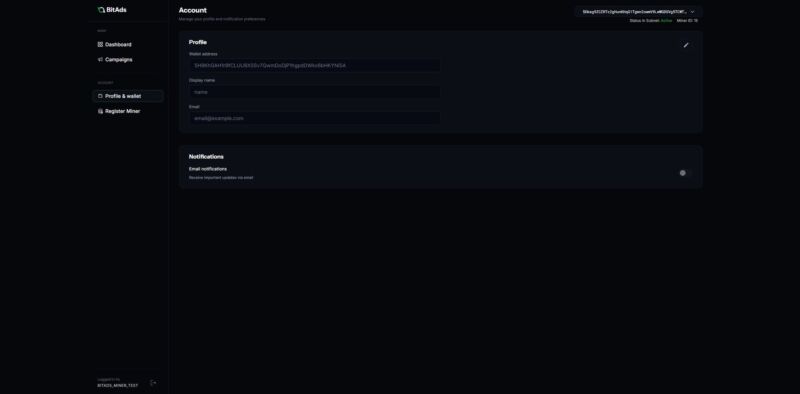
A sneak peek at the UI we’re building for miners and clients on #BitAds. $TAO
Things improve every day, so the final version may look different (the data shown is test data).
#subnet16 #sn16 #bittensor #alpha
A look at our 3 week stats for #BitAds Subnet 16 $TAO
Ranked #8 in Monthly Flow
Ranked #7 in Chain Buys
Subnet emissions up by 114%
The numbers confirm it. More growth ahead.
#bittensor #alpha #sn16
#BitAds SN16 is tokenizing the marketing sector. $TAO
Block by block.
Instead of spent budgets, we stake tokens.
A first real step towards letting anyone access advertising power and take advantage of it!
Built on Bittensor!