With the amount of new subnets being added it can be hard to get up to date information across all subnets, so data may be slightly out of date from time to time
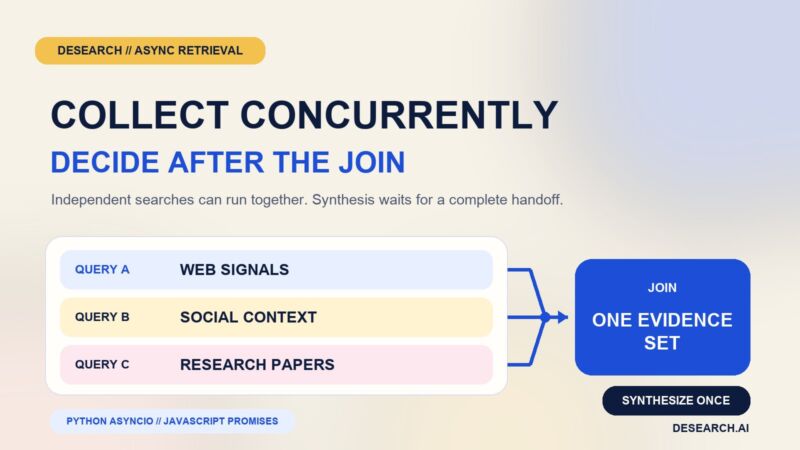
Developed by Datura-ai, Desearch is a decentralized subnet on Bittensor’s Subnet 22 focused on advanced Twitter, Reddit and Google data analysis. This AI-powered tool provides real-time access to Twitter’s database, offering sentiment and metadata analysis to enhance understanding of public sentiment and user interactions. The system not only gathers information but also generates relevant queries, analyzes data, and provides users with well-summarized responses.
Innovation on Subnet 22 within the Bittensor network continues to accelerate, highlighted by the introduction of Datura’s powerful search engine. Designed to optimize your search experience, Datura leverages Bittensor’s decentralized capabilities to deliver precise and concise search results. Its focus is on creating a user-friendly interface to showcase how the system operates.
Datura’s search engine revolutionizes information retrieval, aggregating data from multiple sources, refining it, and presenting it in a clear, accessible format. This marks the future of search on Subnet 22—efficient, effective, and user-friendly. Datura streamlines your search process, eliminating the hassle of sifting through irrelevant content and bringing you directly to the information you need. Its primary objective is to aggregate and analyze diverse data sources to offer users high-quality summaries, insights, and relevant links from the internet, streamlining the search process significantly.
Developed by Datura-ai, Desearch is a decentralized subnet on Bittensor’s Subnet 22 focused on advanced Twitter, Reddit and Google data analysis. This AI-powered tool provides real-time access to Twitter’s database, offering sentiment and metadata analysis to enhance understanding of public sentiment and user interactions. The system not only gathers information but also generates relevant queries, analyzes data, and provides users with well-summarized responses.
Innovation on Subnet 22 within the Bittensor network continues to accelerate, highlighted by the introduction of Datura’s powerful search engine. Designed to optimize your search experience, Datura leverages Bittensor’s decentralized capabilities to deliver precise and concise search results. Its focus is on creating a user-friendly interface to showcase how the system operates.
Datura’s search engine revolutionizes information retrieval, aggregating data from multiple sources, refining it, and presenting it in a clear, accessible format. This marks the future of search on Subnet 22—efficient, effective, and user-friendly. Datura streamlines your search process, eliminating the hassle of sifting through irrelevant content and bringing you directly to the information you need. Its primary objective is to aggregate and analyze diverse data sources to offer users high-quality summaries, insights, and relevant links from the internet, streamlining the search process significantly.
For Subnet 22, the vision is to incentivize miners who excel in scraping and indexing multiple databases, retrieving that data quickly, and using a language model to accurately summarize raw data. This allows us to effectively respond to user queries. To achieve this, miners must have APIs to various sources, including Twitter, Reddit, Google, YouTube, and more. Currently, the primary focus is on perfecting Twitter relevance scores before moving on to other databases. The reward mechanism heavily prioritizes Twitter data relevancy.
Here’s how it works: A query is sent to miners, such as “What is augmented reality’s daily impact in 2024?” Miners use APIs or indexing tools to search their databases and find the best tweets to answer the question. Typically, this involves multiple complex Twitter API calls crafted by trained language models. Miners then return up to 10 tweets in response. Once the validator receives these tweets, they use a language model with context to score them according to specific criteria, which can be found here.
Overview of the Subnet Scoring System
The subnet scoring system evaluates the performance of miners across three key metrics: Summary Scoring, Twitter Scoring, and Search Scoring. This approach ensures that responses are not only relevant but also insightful and comprehensive. The scoring system involves connecting to “subnet 18” to leverage its AI models and cloud capabilities, allowing for a more comprehensive evaluation of minor responses. Here’s how each component is structured:
Effective Scoring Strategy
The scoring system is designed to motivate miners to deliver responses that are not just relevant but also rich in content and insight. By excelling in each area, miners can significantly improve their overall score and, consequently, their rewards. This structured scoring approach ensures consistency and fairness while motivating ongoing improvement in response quality.
The best way to improve a miner’s score is to enhance the relevance score by improving the quality of API calls to Twitter.
On Distribution and Quality
Regarding distribution, it doesn’t matter if only one miner achieves high quality. If one miner can provide the best results, they deserve all the rewards. The focus is on quality, not decentralization for its own sake. Decentralization means equality of opportunity, which is already present as everyone has access to the same information.
The subnet is open-source, and all validator logs are exposed through Weights and Biases here, including all miner scores and associated content. Transparency in how to mine and improve scores is maintained, and community feedback is taken into account. The goal is to have the best miners, regardless of quantity.
Addressing Miner Complaints
Complaints from miners who struggle are often due to a lack of research. The process is clear with open-source code, and miners should compare their answers to others using tools like Weights and Biases, testing various strategies for Twitter API calls. If their methods aren’t as effective as the top miners, deregistration is necessary to maintain high-quality responses.
Deregistering miners who were previously doing well indicates continuous improvement within the subnet. Constant competition ensures only the best miners remain, driving overall subnet quality.
Enhancing Cost Efficiency and Participation
Utilizing Subnet 18’s capabilities reduces the costs associated with running models independently by providing a more cost-effective alternative for validators and miners. Leveraging Subnet 18 not only lowers operational expenses but also broadens the network’s capabilities by utilizing existing resources efficiently, benefiting all participants. Miners can utilize the resources of subnet 18 for scoring, creating a collaborative environment that rewards both contributions and participation.
Key Features
Advantages
Subnet 22 aims to incentivize miners to provide high-quality data retrieval and summarization services by leveraging APIs and indexing tools. The focus on relevance scores and the use of language models to validate results ensure that the best miners are rewarded for their efforts. While some may argue that decentralization is compromised when a single entity dominates the mining landscape, what matters most is the quality of the product and the equality of opportunity for all participants.
For Subnet 22, the vision is to incentivize miners who excel in scraping and indexing multiple databases, retrieving that data quickly, and using a language model to accurately summarize raw data. This allows us to effectively respond to user queries. To achieve this, miners must have APIs to various sources, including Twitter, Reddit, Google, YouTube, and more. Currently, the primary focus is on perfecting Twitter relevance scores before moving on to other databases. The reward mechanism heavily prioritizes Twitter data relevancy.
Here’s how it works: A query is sent to miners, such as “What is augmented reality’s daily impact in 2024?” Miners use APIs or indexing tools to search their databases and find the best tweets to answer the question. Typically, this involves multiple complex Twitter API calls crafted by trained language models. Miners then return up to 10 tweets in response. Once the validator receives these tweets, they use a language model with context to score them according to specific criteria, which can be found here.
Overview of the Subnet Scoring System
The subnet scoring system evaluates the performance of miners across three key metrics: Summary Scoring, Twitter Scoring, and Search Scoring. This approach ensures that responses are not only relevant but also insightful and comprehensive. The scoring system involves connecting to “subnet 18” to leverage its AI models and cloud capabilities, allowing for a more comprehensive evaluation of minor responses. Here’s how each component is structured:
Effective Scoring Strategy
The scoring system is designed to motivate miners to deliver responses that are not just relevant but also rich in content and insight. By excelling in each area, miners can significantly improve their overall score and, consequently, their rewards. This structured scoring approach ensures consistency and fairness while motivating ongoing improvement in response quality.
The best way to improve a miner’s score is to enhance the relevance score by improving the quality of API calls to Twitter.
On Distribution and Quality
Regarding distribution, it doesn’t matter if only one miner achieves high quality. If one miner can provide the best results, they deserve all the rewards. The focus is on quality, not decentralization for its own sake. Decentralization means equality of opportunity, which is already present as everyone has access to the same information.
The subnet is open-source, and all validator logs are exposed through Weights and Biases here, including all miner scores and associated content. Transparency in how to mine and improve scores is maintained, and community feedback is taken into account. The goal is to have the best miners, regardless of quantity.
Addressing Miner Complaints
Complaints from miners who struggle are often due to a lack of research. The process is clear with open-source code, and miners should compare their answers to others using tools like Weights and Biases, testing various strategies for Twitter API calls. If their methods aren’t as effective as the top miners, deregistration is necessary to maintain high-quality responses.
Deregistering miners who were previously doing well indicates continuous improvement within the subnet. Constant competition ensures only the best miners remain, driving overall subnet quality.
Enhancing Cost Efficiency and Participation
Utilizing Subnet 18’s capabilities reduces the costs associated with running models independently by providing a more cost-effective alternative for validators and miners. Leveraging Subnet 18 not only lowers operational expenses but also broadens the network’s capabilities by utilizing existing resources efficiently, benefiting all participants. Miners can utilize the resources of subnet 18 for scoring, creating a collaborative environment that rewards both contributions and participation.
Key Features
Advantages
Subnet 22 aims to incentivize miners to provide high-quality data retrieval and summarization services by leveraging APIs and indexing tools. The focus on relevance scores and the use of language models to validate results ensure that the best miners are rewarded for their efforts. While some may argue that decentralization is compromised when a single entity dominates the mining landscape, what matters most is the quality of the product and the equality of opportunity for all participants.
The ongoing development process includes enhancing validations and analyses to ensure the relevance and timeliness of the retrieved data, allowing users to filter information based on specific criteria like dates, regions, and language.
Moving forward, there are plans to introduce more avenues for competition and improve the incentive curve. High-performing miners will receive more rewards than those performing slightly worse, motivating ongoing improvement. The goal is to ensure that the subnet consistently delivers high-quality results to users.
A crucial aspect of Subnet 22’s roadmap involves enabling users to access its AI capabilities freely, enhancing search engine functionalities and offering summarized content for improved user efficiency.
The ongoing development process includes enhancing validations and analyses to ensure the relevance and timeliness of the retrieved data, allowing users to filter information based on specific criteria like dates, regions, and language.
Moving forward, there are plans to introduce more avenues for competition and improve the incentive curve. High-performing miners will receive more rewards than those performing slightly worse, motivating ongoing improvement. The goal is to ensure that the subnet consistently delivers high-quality results to users.
A crucial aspect of Subnet 22’s roadmap involves enabling users to access its AI capabilities freely, enhancing search engine functionalities and offering summarized content for improved user efficiency.
Huge thanks to Keith Singery (aka Bittensor Guru) for all of his fantastic work in the Bittensor community. Make sure to check out his other video/audio interviews by clicking HERE.
In this audio interview, Keith chats with Giga, the developer behind Subnet 22 Datura. Datura accesses a wide array of sources directly and employs its proprietary “smart scrape” technology to deliver highly relevant responses to user queries including utilizing an LLM to generate summaries of results. Kieth delves into their features, incentive mechanism, and future plans.
Novelty Search is great, but for most investors trying to understand Bittensor, the technical depth is a wall, not a bridge. If we’re going to attract investment into this ecosystem then we need more people to understand it! That’s why Siam Kidd and Mark Creaser from DSV Fund have launched Revenue Search, where they ask the simple questions that investors want to know the answers to.
Recorded in September 2025, this Revenue Search episode features Giga from Subnet 22, an open real-time search layer designed for AI agents and LLMs. Giga explains how Subnet 22 solves the problem of AIs being “blind” without live data by enabling miners to scrape, analyze, and rank information from platforms like Twitter, Reddit, YouTube, and the wider web—returning fresh, relevant, and contextually accurate results. Developers can easily integrate this via APIs and SDKs, while businesses can deploy autonomous agents that monitor conversations, perform sentiment analysis, and even engage potential customers in real time. The conversation highlights use cases ranging from crypto project monitoring to sales automation, pricing models for bot deployment, and long-term plans to support alpha token value through revenue buybacks. Subnet 22 positions itself as a decentralized alternative to expensive centralized APIs, powering the next generation of AI-driven agents and applications.
A big thank you to Tao Stats for producing these insightful videos in the Novelty Search series. We appreciate the opportunity to dive deep into the groundbreaking work being done by Subnets within Bittensor! Check out some of their other videos HERE.
Recorded October 2025: A live “Novelty Search” session features Giga (“Cosmic”) and his CTO “Professor” unveiling Subnet 22 (Desearch): a decentralized, permissionless real-time search layer for AI agents and LLMs that replaces pricey, rate-limited centralized APIs with miners who scrape the open web (X/Twitter, Reddit, Hacker News, Wikipedia, general web), rank sources, and generate summaries, while validators score freshness, structure, relevance, hallucination-freedom, speed, and chat-history handling; the team (incl. Sally and Fish from SN51) traces origins from a Colombia meetup, shows benchmarks where Desearch’s AI Search outperforms Perplexity/OpenAI/Gemini on link/content relevance, and contrasts pricing (pay-as-you-go, far cheaper than X’s official API) and scale (thousands of req/s via miner parallelism). They demo a developer console and an agent-builder platform (“RZY”) used for lead-gen and monitoring (e.g., auto-finding GPU buyers for SN51), discuss integrations with other subnets (e.g., SN64 for LLM checks), anti-abuse and performance fixes, and stress tests. Business updates note ~$11k MRR, ~1k registered users, ~200 agent beta users, a revenue-burn payback model for miners, and a roadmap focused on sales/marketing, more sources, improved scoring, and refreshed benchmarks; Q&A covers miner burn flexibility, clients from within BitTensor, and the pitch that Darch is “builders’ search infra,” aiming to make knowledge open, real-time, and accessible.
What if your agents could search, learn, and act in real time?
#Desearch makes it possible, one query at a time 👀
Here’s what’s new across #Desearch this week (29.10-04-11) 👇
🧩 Console Updates:
- Fixed Google & GitHub sign-in issues
🤖 #RizzyAgent Updates:
- Fixed N/A criteria scores in agent profiles
- Updated chat docs - “What can you do?” now shows correct info
- Fixed X account…
Here are 5 reasons why startups should choose #Desearch to build, test, and scale faster with real-time AI search
1/5🧵
Reason 5: Built for Teams that Move Fast
Desearch isn’t just for developers - it’s for teams that ship.
Plug real-time search into your app, LLM, or AI agent and move from data to decision in seconds.
6/7🧵
The fastest startups don’t guess, they adapt in real time.
Desearch helps you build that advantage.
⚡ Start here |
7/7🧵
Desearch | Real-Time Search APIs
Desearch provides a real-time AI search API for Web, X(Twitter), Reddit and more. Get instant, accurate data without...
desearch.ai
#Desearch is an official sponsor of the 2025 Scoop Al Hackathon,
powered by @Neo_Blockchain and @SpoonOS_ai!
We're empowering builders with API credits to supercharge their agent-
powered projects.
This hackathon dives deep into how Al agents collaborate, compete, and
connect…
@Neo_Blockchain @SpoonOS_ai Who’s building for the Scoop AI Hackathon?👀
🚀 #Desearch Weekly Updates (Oct 23–28)
From Subnet 22 updates to API improvements and #RizzyAgent fixes, here’s everything that shipped this week across Desearch.
1/5🧵👇
🤖 #RizzyAgent Updates:
Major updates improving usability and flow:
- Fixed generate & reply commands for whitelisted users
- Improved first-page UI - users now see chat & agent lists
- Added login page for logged-out users (no more blank chats)
- Fixed Google & GitHub sign-in…
📣 And one more thing - we’re now on Telegram!
Join the builders’ space to share ideas, follow updates, and connect with the Subnet 22 community 👉 https://t.me/desearchAI
5/5 🧵
Subnets are stronger than ever.
This month has been marked by multiple partnerships and product releases. The outside world is starting to realize the power of $TAO Bittensor.
Here are the latest synergies (+buybacks) added to my map. ⬇
------------
More details for curious…