
What is Bittensor
Let’s learn a bit more about Bittensor…

Bittensor Explained
At the heart of the Bittensor ecosystem is the creation, promotion, and sale of digital commodities. Surrounding this core is a vast and growing landscape of interconnected internet ecosystems.
Everything operates in a decentralized manner. Digital commodities such as compute power, data, storage, predictions, and models are converted into intelligence. This transformation leads to the discovery of new architectures, the creation of new commodities, and the revelation of surprisingly cost-effective ways to innovate. The potential is proving to be limitless.
TAO, the decentralized currency, powers the production of this intelligence within subnets. These intelligence-generating subnets are then creatively interconnected in ways that are both productive and profitable, allowing one form of intelligence to enhance another.
You can consume a subnet’s digital commodity. If you’re a subject-matter expert, such as a machine learning practitioner, you can become a subnet miner, producing top-tier predictions for your customers and earning TAO. Alternatively, you can be a subnet validator, identifying markets, enterprises, small businesses, application developers, or end-users for these digital products, generating revenue, and earning TAO. Or, you can be a subnet owner, creating fertile grounds for the growth of your subnet validators and miners, and earn TAO.
How Does the Bittensor Protocol Work?
The Bittensor Protocol is a decentralized machine learning framework designed to enable the exchange of machine learning capabilities and predictions among participants in a peer-to-peer network. This facilitates the sharing and collaboration of machine learning models and services.
Bittensor Network AI Protocol Overview
The Bittensor network is composed of nodes, known as miners, that participate in the protocol. Each node operates Bittensor client software, allowing it to interact with other nodes within the network.
To participate and mine TAO tokens, users must register a hotkey. This can be done either by solving a proof of work (PoW) challenge or by paying a fee using the recycle_register method.
Once registered, a node becomes part of a subnet, which is focused on a specific domain or topic within the Bittensor network. Each subnet hosts its own set of registered nodes and associated machine learning models.
Validators play a crucial role by validating responses and predictions from miners. They ensure the integrity and quality of the data and models exchanged within the network. Validators query miners and evaluate their responses to determine accuracy and reliability, serving as intermediaries and access points for user and application interactions.
Miners provide machine learning services by hosting models locally. When a client application requires a prediction, it sends a request to the Bittensor network, which routes it to a suitable miner. The miner processes the request using its local model and returns the prediction through the network.
The Bittensor network uses consensus algorithms to maintain data integrity, prevent double-spending, ensure data consistency, and uphold network security. These mechanisms help achieve agreement on the network state.
The network uses a token-based economy to reward miners and validators for their computational resources and accurate predictions. This incentivization encourages active participation and helps maintain network stability and efficiency. Users contributing valuable data or computational resources are rewarded with TAO tokens.
Consensus Mechanism of TAO Bittensor
Proof of Intelligence is a unique consensus mechanism in Bittensor, rewarding nodes that contribute valuable machine learning models and outputs. Unlike PoW or PoS mechanisms, nodes perform machine learning tasks to demonstrate their intelligence. Nodes with more accurate and valuable outputs have a higher chance of adding new blocks to the chain and receiving TAO token rewards.
Bittensor employs a decentralized MoE model, using multiple neural networks to address complex problems. Each expert model specializes in a specific aspect of the data, and together they generate collective predictions that surpass the capabilities of individual models. This approach enables higher prediction accuracy and the ability to handle larger data volumes.
Problems Bittensor Addresses
Training AI models requires significant computational power, often accessible only to large corporations and research institutions. This concentration leads to permissioned and siloed AI models, limiting collaboration. Bittensor democratizes access to computational power, allowing smaller entities to participate.
Current AI models often operate in silos, limiting collaboration and knowledge transfer. Bittensor facilitates a collaborative environment where models can learn from each other, accelerating innovation and reducing redundant efforts.
Bittensor’s Goal
Bittensor aims to create a peer-to-peer marketplace that incentivizes the production of machine intelligence. Using techniques like the mixture of experts and knowledge distillation, the platform encourages knowledge sharing among researchers, leading to more powerful AI models. The ultimate vision is a fair, transparent, and accessible AI market, supported by the decentralized TAO token.
Bittensor Network Structure
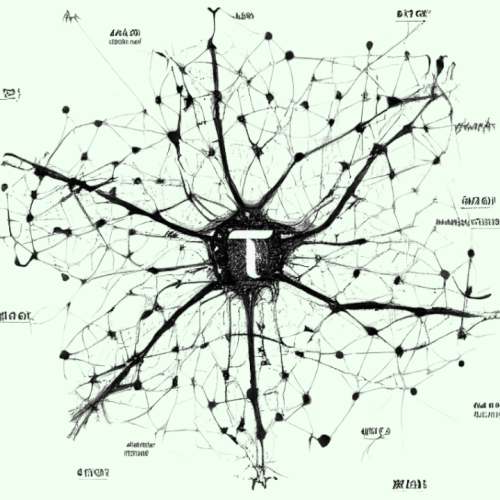
Bittensor’s architecture is inspired by the cognitive processes of the human brain. Each computational unit, or “Neuron,” includes a model, dataset, and loss function. Neurons communicate like biological neural networks, optimizing their functions through cooperative learning. Each Neuron has an Axon terminal to receive inputs and a Dendrite terminal to transmit inputs. The training process involves sending input batches to neighboring Neurons and processing these inputs through local models, fostering an intelligent and interconnected network of Neurons.
TAO Token
The total supply of TAO is capped at 21 million tokens, similar to Bitcoin, to limit inflation and maintain value.
TAO can be managed in wallets compatible with the Polkadot ecosystem, such as the Polkadot JS Wallet. Tokens are stored on the blockchain, with wallets providing the interface to access and control them. Users can manage their TAO tokens via the Bittensor blockchain explorer at explorer.finney.opentensor.ai.
Buying TAO
TAO tokens can be purchased on various exchanges and platforms, including:
Investors of Bittensor
Bittensor has attracted notable investors, including:
Digital Currency Group
Polychain Capital
FirstMark Capital
GSR
Bittensor Team
The Bittensor Foundation is led by several key figures, including:
Jacob Robert Steeves – Co-Founder
Ala Shaabana – Co-Founder
Conclusion
Bittensor’s system is designed for diversity, enabling engineers to fine-tune models, plug them into the network, and innovate. This scalable system fosters an open-ended ecosystem for AI development, harnessing global computing power and innovation. Researchers and engineers are invited to join Bittensor’s mission to create a new paradigm for AI, leveraging digital trust to build a powerful and intelligent future.
Understanding Bittensor
Some of the best videos that have been created to understand how Bittensor works have been created by TAO Templar. Huge thanks to everything you contribute to the Bittensor community. Make sure to subscribe and check out the rest of his videos by clicking HERE.
How does Bittensor work?
This video explores how the Bittensor ecosystem operates by examining each key participants and their roles within the network. Through practical examples, it breaks down the different types of subnets, how users gain access to subnet products, and the competitive dynamics involved. It also highlights the role of stakers and explains how these components interact to form the broader Bittensor economy.
Bittensor TAO ELI5 - How Powerful is Bittensor?
This video examines the power of Bittensor by comparing it to Bitcoin’s proof-of-work model. While Bitcoin incentivizes miners to build the best machines for guessing hashes, Bittensor expands this concept to any task verifiable by code—such as AI training, storage, trading, and advertising.
Bittensor - TAO's True Value
This video offers a detailed overview of Bittensor’s tokenomics, explaining the role and value of its native token, TAO. It outlines how TAO is earned through valuable work verified by validators, and how staking influences the direction and funding of various subnets. The video emphasizes that TAO is not just speculative—it holds intrinsic value, as it grants access to real, high-value outputs like trading signals or language model services.
Bittensor TAO's Purpose
This video explores the deeper purpose behind Bittensor, comparing its mission to the original ideals of Bitcoin. While Bitcoin sought to decentralize financial power from governments and central banks, Bittensor aims to decentralize the creation, access, and ownership of artificial intelligence.
Bittensor TAO - Country Analogy
This video simplifies the often complex terminology of Bittensor by using a relatable analogy to explain how its ecosystem functions. It compares buying Alpha in a Bittensor subnet to purchasing shares in a company using local currency—where TAO is the currency and Alpha represents shares.
Bittensor TAO - Alpha Tokens
In this video, TAO Templar breaks down Bittensor Alpha tokens — what they are, how they work, and their role in the Bittensor ecosystem. You’ll learn about their exchangeability with TAO, their states, the potential risks and opportunities, and how Alpha ultimately benefits Bittensor as a whole. He also explores future functionality possibilities through the Bittensor EVM.
Bittensor TAO - How does it create AI?
This video explains how Bittensor enables the decentralized creation of AI by breaking down the traditional AI development process—data collection, pretraining, fine-tuning, and inference—and showing how each step is handled by specialized subnets within the network.
Bittensor - Introduction to Dynamic TAO
This video introduces Dynamic TAO (dTAO), the third major upgrade to the Bittensor network. It explains how dTAO transitions Bittensor from a representative democracy—where emissions are allocated by validators—to a direct democracy where stakers themselves influence which subnets receive rewards.
How to stake Bittensor TAO
This video offers a full walkthrough of how to stake TAO and Alpha within the Bittensor network. It begins by guiding users through setting up a wallet, transferring TAO from a centralized exchange, and staking it to the root subnet (subnet 0) for a stable, risk-free return.
Bittensor TAO - Subnet Pools and Slippage
This video explains how subnet pools—also called liquidity or alpha pools—function within the Bittensor ecosystem. Subnet pools are the exclusive mechanism for buying and selling Alpha tokens, which represent staked value in specific subnets.